Professor Elizabeth Wayne is developing a novel way of tracking cancer-fighting cells – and chalking up a series of professional recognitions as she does.
Call it a bright idea. Professor Elizabeth Wayne is using the enzyme that gives fireflies their glow to study the white blood cells that attack cancer in the human body. With her team in the Department of Bioengineering, she has invented a new way of using bioluminescence to track the development of what are known as macrophages.
Macrophages are particularly tricky to study. Cells called monocytes handle an early stage of the immune response to cancer and other pathogens. Monocytes are drawn to infections in the body and then split into either macrophages or dendritic cells. Dendritic cells swallow up pathogens and carry them to the lymph system for further processing.
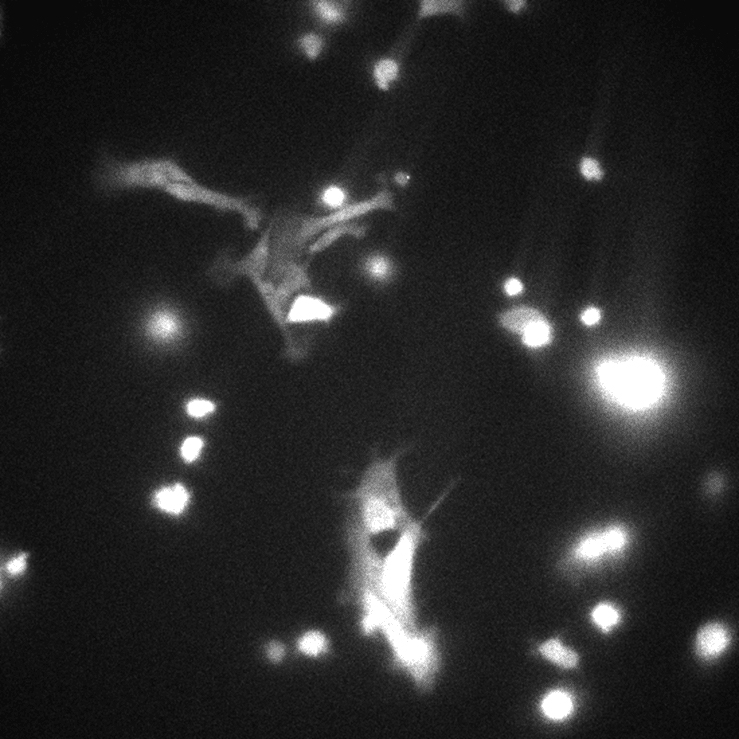
Macrophages, meanwhile, do their best to kill pathogens right on site.
In their research, the Wayne team labels a protein complex on the monocytes with firefly luciferase (the enzyme that also sets lighting bugs to blinking). Then they introduce those cells into a culture with cancer cells and monitor the differentiation.
“This novel bioluminescent technique is important for biosensing and for cancer research, because it tracks information about how these cells behave both over time and across their environment,” Wayne said. “Traditional methods like PCR techniques and flow cytometry only give us a static picture of the situation.”
Rather than measuring cell state, which is a representation of how things currently are, I think we should care about ‘cell rate.’ That is, how are cells changing – how fast or slow can they change? We need different techniques to do that. – Professor Elizabeth Wayne
With data that shows macrophages’ behavior over time, researchers can better understand how a cancer tumor and the microenvironment around it impact macrophages’ creation and their success in battling the tumor.
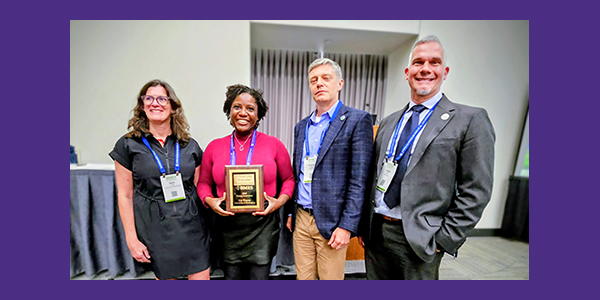
Wayne earned back-to-back annual awards from the Biomedical Engineering Society’s Cellular and Molecular Bioengineering (CMBE) Special Interest Group, in part for this work. She received the 2025 CMBE Young Investigator Award and was also named a CMBE Rising Star for 2026.
In October, CMBE dedicated an issue of its journal to its Young Investigators. The Wayne lab published a study in the special issue outlining their firefly-inspired biosensing technique. The article also shared results that used the technique to watch monocytes respond to a form of colorectal cancer (HCT116) and a form of breast cancer (MDA-MB-231). Over the course of three days, the team observed that fewer macrophages were produced in the presence of the breast cancer cells when compared to the colorectal cancer cells – and that the macrophages were produced over a longer period of time in the presence of the breast cancer.
Join Professor Wayne during her “Office Hours”
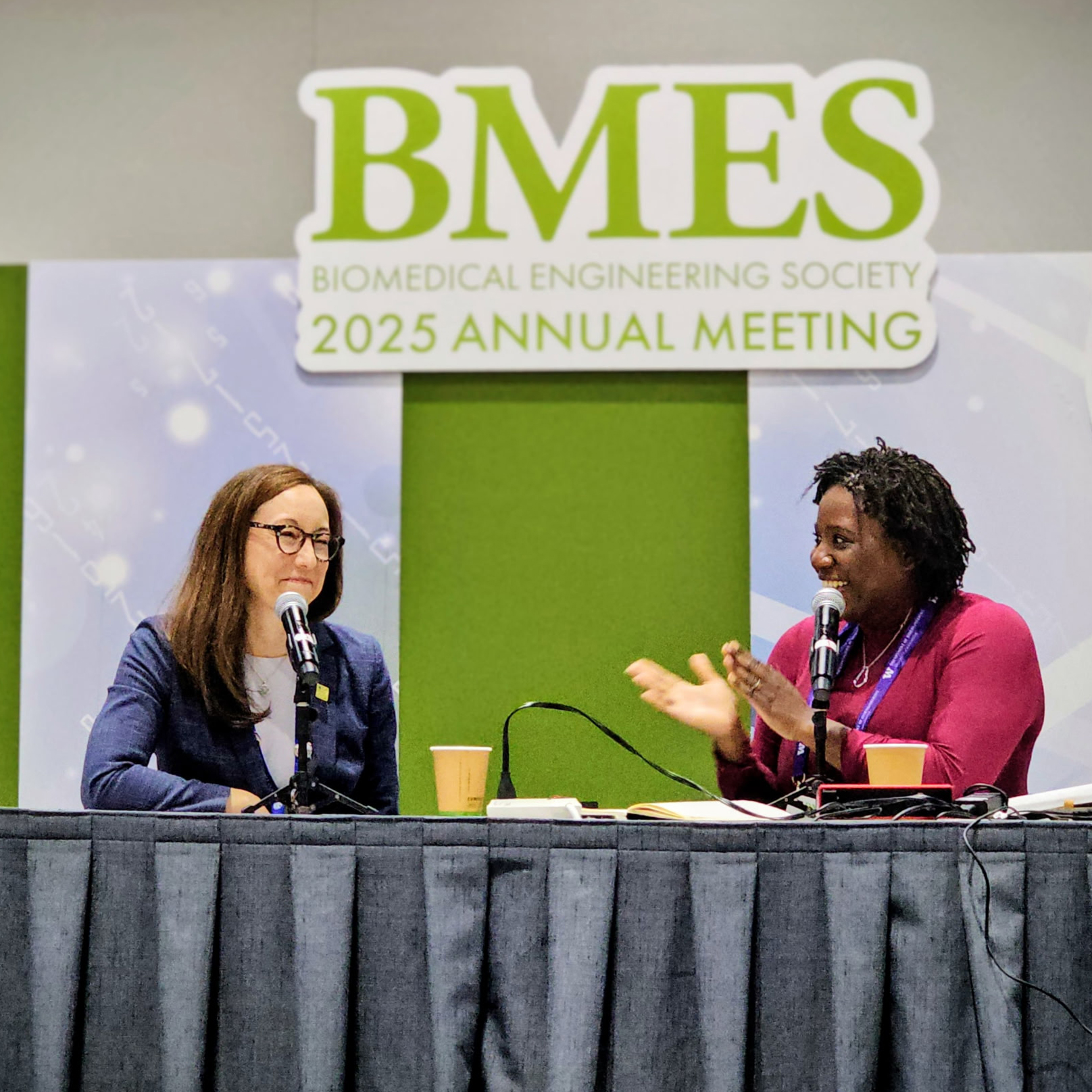
Every professor hosts office hours, and Elizabeth Wayne lets you in on them. In her “Office Hours” podcast, Wayne taps her wide network of friends and colleagues to discuss some of the most important, and often controversial, topics surrounding biomedical engineering. Together, they provide a deep dive into everything from the daily lives of biomedical engineers to innovations shaping the future of medicine – exploring how biomedical engineers are building a healthier, more-equitable world.
“Office Hours” is supported by the Biomedical Engineering Society. It launched in 2025 with a conversation with Professor Shelly Sakiyama-Elbert, another member of the UW Bioengineering faculty.