


Stevens Earns $29M Bioprinting Grant |
|
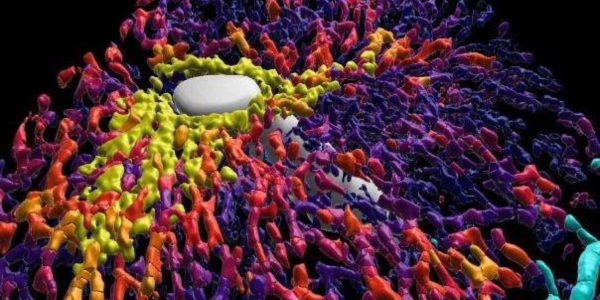
Professor Kelly Stevens earned a $29 million grant from ARPA-H to further her bioprinting human liver tissue research with collaborators at Carnegie Mellon. Read more on her bioprinting research. |
FACULTY NEWS |
|
RESEARCH |
|
BioE Team Delivers New Insights to Fight Heart Disease Platform Bridges Gap to Human Brain Therapies AI Technique ‘shows its work’ Fighting Blood Clots |
STUDENT NEWS |
|
Student-athlete Champions Spelman Fund Launched From Capstone to CTO |
HIGHEST MARKS FROM ABET |
|
An external evaluation team from ABET – the organization that accredits university programs in applied science, computing, and engineering – issued a report with no findings for UW Bioengineering. This is the most-favorable outcome available for the evaluation, which takes place every six years. “This is the first time in our program’s history that we passed unconditionally with no repeat visits or additional documentation needed,” said Department Chair Princess Imoukhuede. “That saves tens of thousands of dollars in follow-up fees and faculty and staff time that would have been redirected to accreditation documentation.” “Evaluators recognized our strong industry connections and highlighted our department as a model for how to connect students to industry. Such a positive evaluation reaffirms our leadership across our discipline and reflects the expertise and consistent effort across our department.” The department’s Bioengineering Transformation Blueprint guides our progress, and the strategy it captures was integral to our successful ABET evaluation. Read UW Bioengineering’s Winter 2026 Impact Report and Transformation Blueprint. |
FEATURED PUBLICATIONS |
|
Massaro A, Villegas Novoa C, Allbritton NL. An in vitro model of stiffened colonic mucosa exhibits altered epithelial behavior. Biofabrication. 2025 Dec 29;18(1):015018. doi: 10.1088/1758-5090/ae2cf2. PMID: 41397376; PMCID: PMC12745674. Gregorio NE, et al., Baker D, DeForest CA and UW Department of Chemical Engineering and Institute for Stem Cell & Regenerative Medicine. Stimuli-triggered formation of de novo-designed protein biomaterials. Cell Biomaterials. 2025;2:100239. doi:10.1016/j.celbio.2025.100239 Yingye Fang, P.I. Imoukhuede. From “high” to “how many”: How quantifying receptor abundance links genotype, environment, and therapeutic response. Current Opinion in Biomedical Engineering. 2026;37:100646. doi.org/10.1016/j.cobme.2025.100646. Song K, Nguyen DC, Wang Y, Jokonya S, Yazdani O, Sellers DL, Stayton PS, Pun SH. Peptide vaccine formulations with structurally distinct STING agonist drugamers induce discrete, efficacious antitumor responses. Proc Natl Acad Sci U S A. 2025 Nov 11;122(45):e2409978122. doi: 10.1073/pnas.2409978122. Epub 2025 Nov 3. PMID: 41183196; PMCID: PMC12626017. Zholudeva LV, et al., Sakiyama-Elbert S. Beyond Transplantation: Engineering Neural Cell Therapies and Combination Strategies for Spinal Cord Repair. Brain Sci. 2026 Jan 21;16(1):113. doi: 10.3390/brainsci16010113. PMID: 41594834; PMCID: PMC12838813. Wenting Yang, et al., Patrick S. Stayton. Combinatorial Discovery of RAFT Cationic Polymers for mRNA Delivery: Structure–Function Insights from High-Throughput Screening and Machine Learning. Biomacromolecules. 2025 26(11):7724. doi.org/10.1021/acs.biomac.5c01236. Tian R. Interaction of PGC-1? and GDF15 in the stressed heart. Nat Cardiovasc Res. 2025 Oct;4(10):1216-1218. doi: 10.1038/s44161-025-00729-8. PMID: 41006918. |