


NIH-funded project will expand Smoldyn software to simulate the complex interactions by which cells divide, move, and engulf other materials.
Computer modeling is an important tool in modern cell biology, but it typically requires specialized, custom-built software. No general-purpose simulator currently represents proteins, filaments such as DNA and actin, and dynamic cell membranes within a single framework.
These features are needed to study fundamental biological processes, including the ways cells move, divide, pass on genetic information, and engulf external materials.
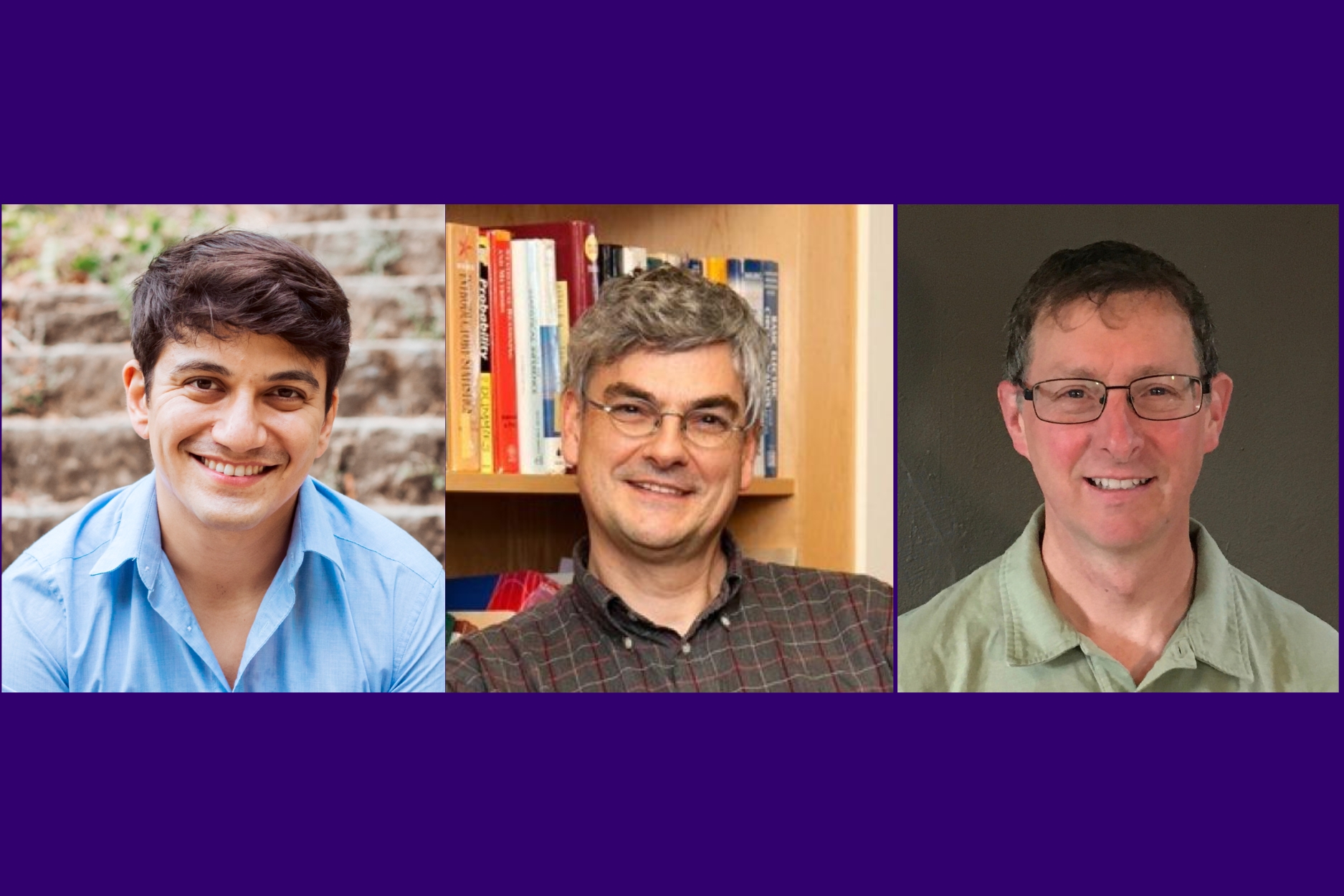
UW Bioengineering’s Professor Herbert Sauro, who leads the multi-institutional Center for Reproducible Biomedical Modeling, is part of a team that will add those features to a widely used software platform for the spatial modeling of cellular systems called Smoldyn. The effort is supported by a recent grant from the National Institutes of Health’s National Institute of General Medical Sciences. It includes Steven Andrews, Smoldyn’s principal developer, and Professor Matthew Akamatsu of UW’s Department of Biology.
Smoldyn has been integral to computational biology for more than 20 years. The 2004 paper introducing the software is among the top 10 percent of articles cited within the community, according to OpenAlex. Papers based on models created with Smoldyn appeared in Communications Biology, Journal of Molecular Biology, npj Digital Medicine, and Journal of Computational Chemistry last year alone.
“Herbert and the Smoldyn team are an epicenter of computational biology,” said Department Chair Princess Imoukhuede. “He has set the standard for the field, and his leadership brings people and ideas together. When a tool is integrated into Smoldyn, we can be sure that it is going to be leveraged by leading researchers around the world for important findings and real progress.”
The work offers significant opportunities to connect computational modeling with modern experimental cell biology. New algorithms will enable Smoldyn users to simulate filament behaviors such as bending, twisting, branching, and interactions with molecules and cellular surfaces. Researchers will also be able to explore the behavior of the protein actin. A backbone of the cell, actin supports and directs the cell membrane. Understanding actin’s behavior will help scientists reveal how forces generated by actin, the organization of the actin cytoskeleton, and membrane shape influence one another during endocytosis.
“Modern microscopy allows researchers to observe cellular structures in extraordinary detail, but our computational models have not kept pace,” Sauro said. “Our goal is to develop tools that allow researchers to model these structures and their interactions in a realistic and computationally efficient way.”
The project will involve close collaboration with the broader modeling and experimental community. The team will support integration of Smoldyn with other modeling tools and contribute to the development of standardized languages for describing spatial cellular models.