


A multidisciplinary team from across the University of Washington, led by Bioengineering’s Professor Ayokunle Olanrewaju, earned support from NIH’s National Institute of Allergy and Infectious Diseases.
“Did you remember to take your medicine?” You’ve probably been asked that question or asked it of a friend or family member. It’s for good reason. Taking your medicine at the right time, the proper dose, and the full course of your prescription is critical to its success. And failing to adhere to that guidance is very common.
Professor Ayokunle Olanrewaju is designing a new generation of tests to improve drug adherence. The work is backed by a five-year grant from the National Institutes of Health’s National Institute of Allergy and Infectious Diseases.
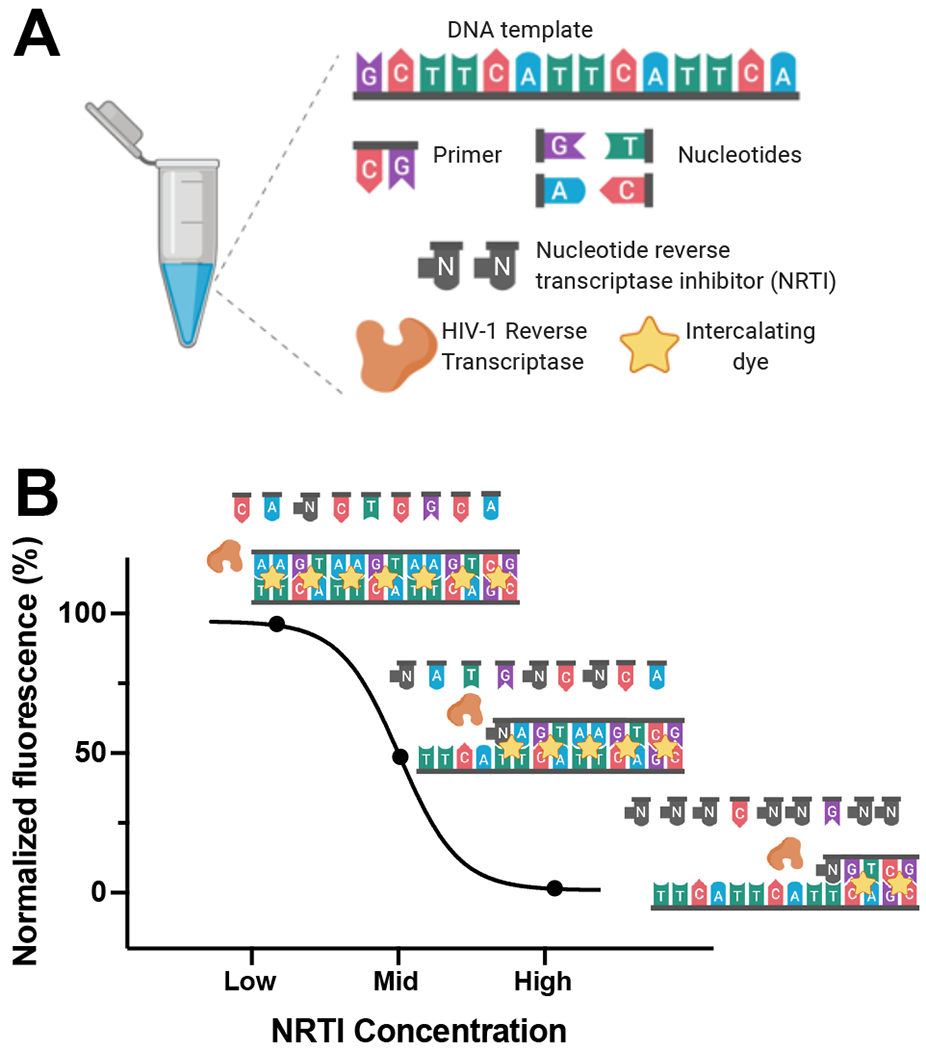
His team is building an assay that will measure the levels of anti-HIV medications used for pre-exposure prophylaxis (PrEP) to prevent infection and treatment among people living with HIV. Because it is enzyme-based, the assay will run in about 30 minutes and can be administered inexpensively at the point of care. It will expand on the team’s REverse transcriptase ACTivity (REACT) assay, which measures drugs that target the HIV reverse transcriptase (RT) enzyme. RT inhibitor drugs form the backbone of most HIV treatment and prevention regimens and are included in many emerging treatment options including vaginal rings and long-acting injectables.
“The University of Washington is uniquely positioned to deliver on this promising approach, with our multidisciplinary expertise in enzymatic assays, point-of-care diagnostics, clinical validation, and implementation science. We have the skilled, insightful colleagues we need right here, and we consistently do great things together,” Olanrewaju said.
Olanrewaju and colleagues were inspired by early work in the late ‘80s and early ‘90s that identified the unique enzyme activities and biochemistry of HIV. Their first paper on REACT, published when he was a postdoctoral fellow in UW Mechanical Engineering in 2020, tailored these enzyme activity assays for rapid and selective measurement of RT inhibitors used in first-line HIV treatment regimens. They followed up with a pilot evaluation with clinical samples in 2021, a theoretical model to enable deterministic design and expansion to multiple drugs used in combination HIV treatment in 2023, extension to two different sub-classes of RT inhibitors including drugs used in rings and injectables in 2024, and a larger validation study with archived samples from a clinical study in Thailand in 2025.
Oral PrEP can cost as much as $22,000 per year per person and other treatments can run as high as $40,000 per person per year. Long-acting versions of the drugs – which typically have higher adherence rates – are likely years from being available in low-resource areas. And even when they’re readily available, some people will likely always prefer oral medications.
As a result of these costs and timelines, HIV treatment will continue to rely on daily oral pills in much of Sub-Saharan Africa, where adolescent girls and young women are disproportionately impacted by HIV. Adolescent girls and young women account for 25 percent of new HIV infections in sub-Saharan Africa despite representing only 10 percent of the population. One of the best methods of improving their drug adherence is meeting periodically with a counselor to discuss the treatment. Drug level feedback, embedded within a suite of support tools, have been shown to improve HIV prevention success rates. However, current methods for measuring adherence, which rely on centralized and expensive mass spectrometry, which led to delays as long as 60 days for drug level feedback in those studies.
“Fast, easy ways of testing if people are following their treatment plans are powerful for the counselors,” Olanrewaju said. “Inexpensive tools like the one we’re designing provides an objective read on whether medications are being taken correctly. They also encourage people to have candid conversations with their healthcare providers about their drug adherence.”
The Olanrewaju Lab is working with UW Bioengineering’s Professor Barry Lutz to integrate the REACT assay into the Harmony portable diagnostic system developed by Lutz’s team during the COVID-19 pandemic. Professor Jillian Pintye (UW Global Health & Biobehavioral Nursing) and Health Informatics, and Professor Kenneth Mugwanya (UW Global Health & Epidemiology) will provide archived samples from implementation studies completed among adolescent girls and young women receiving PrEP. Colleagues at the UW’s Center For AIDS Research. Translational Research Subcore, led by Professor Adrienne Shapiro (UW Global Health), will provide additional clinical samples through their Enhanced Data and Specimen Collection Service. Professor Peter Anderson and his team at the Colorado Antiviral Pharmacology Lab will complete gold-standard mass spectrometry measurements to validate the REACT assay.
More than 20 years ago the World Health Organization reported that only about half of people receiving drug treatments followed their health providers’ instructions about the treatment. Recent studies show that little has changed, and that adherence rates are yet lower in populations with limited resources and healthcare access.
“Non-adherence in HIV is complicated by a variety of socio-economic factors including stigma, health inequities, and financial difficulties. Our hope is that technologies like REACT will provide an accessible option for anyone anywhere to know if they have a sufficient amount of HIV medication in their system,” Olanrewaju said.
The test has applications beyond monitoring HIV prevention, since the more than 30 million people living with HIV need adequate medication to prevent treatment failure and drug resistance.