

 UW Bioengineering alumnus Savannah Bifulco has really built a career for herself. Literally. She was the first therapy development scientist to be part of the electrophysiology division, helping to define a new way of bridging disparate parts of the $20 billion medical device company.
Now, only about three years after hiring on, she leads this cross-functional activity globally for the company.
“I got a LinkedIn message from one of the directors,” at Boston Scientific, she explained. “He said, ‘I have this idea…I’m looking for talented scientists who can partner with our internal marketing teams, primarily to interface with our key doctors in the field and core customers.’”
“I sit at the crux of these three pillars. The research side, the scientific communications side, and the clinical side. There needs to be someone who can speak the doctor’s language. Who really understands the research, understands the company’s portfolio, who understands the fundamental science and clinical implications, and understands a procedure from A to Z.”
She spends much of her time helping bring new ablation technologies to market. In an ablation procedure, a portion of heart muscle is electrically isolated from the rest of the heart using heat, cold, or electrical pulse. It is often used to treat a type of irregular heartbeat known as atrial fibrillation.
In her role, she fields questions from doctors who might be curious about Boston Scientific’s ablation tools or who might have ideas for how to improve them. She explains them at conferences and in closed-door briefings. She leads research into pulsed field ablation-related preclinical studies from protocol design to publication.
She even sits in on first-in-human procedures, as the expert in the technology.
“Savannah is a really shining example of a successful transition from academia to industry,” Professor Patrick Boyle, Bifulco’s PhD advisor, said. “She has published research papers, but also she has been a leader in the deployment of new technology in the clinical context. She works very closely with clinicians and other healthcare professionals on a daily basis and has traveled the world to be the ‘engineer in the room’ on groundbreaking trials of new cardiac mapping and ablation technology.”
Organic and Interactive
Bifulco was one of the first two students to join Boyle’s Cardiac Systems Simulation (CardSS) lab in 2018. She used computational modeling to study which patients most benefited from ablation treatments and which were less well-suited. During her time there, she was supported by an Bioengineering Cardiovascular Training Grant from the National Institutes of Health and an R01 grant to Boyle’s lab from NIH’s National Heart Lung and Blood Institute.
“We were all fresh out of the gate, and Pat’s right in there with us. He’s working in these coding scripts he’s written himself. I’m watching him go into the BIOS [the most basic set of instructions that get a computer up and running when it turns on],” she said.
“Alex [the other graduate student at the time] and I are sitting on either side of him, like ‘Oh, what does that code do? How did you complete that?’ And at the same time, he’s narrating what’s going on.”
The collaborative nature of the CardSS lab played a significant role in her professional development. They earned her a spot at the competitive Simula Summer School in Computational Physiology and a fellowship from the ARCS Foundation. She was also lead author on a paper in Communications Medicine that was what Boyle described as the CardSS lab’s “first big push to incorporate AI/machine learning alongside our computational physiology, or anatomically similar digital twins, research.”
“With some [PhD advisors], you’re doing a weekly meeting or monthly touch-up. This was much more organic and interactive,” she said. While the lab grew in complexity, impact, and personnel during her five years, its personality stayed much the same. Boyle created and Bifulco embraced a lively lab culture that grew important skills and a network of contacts.
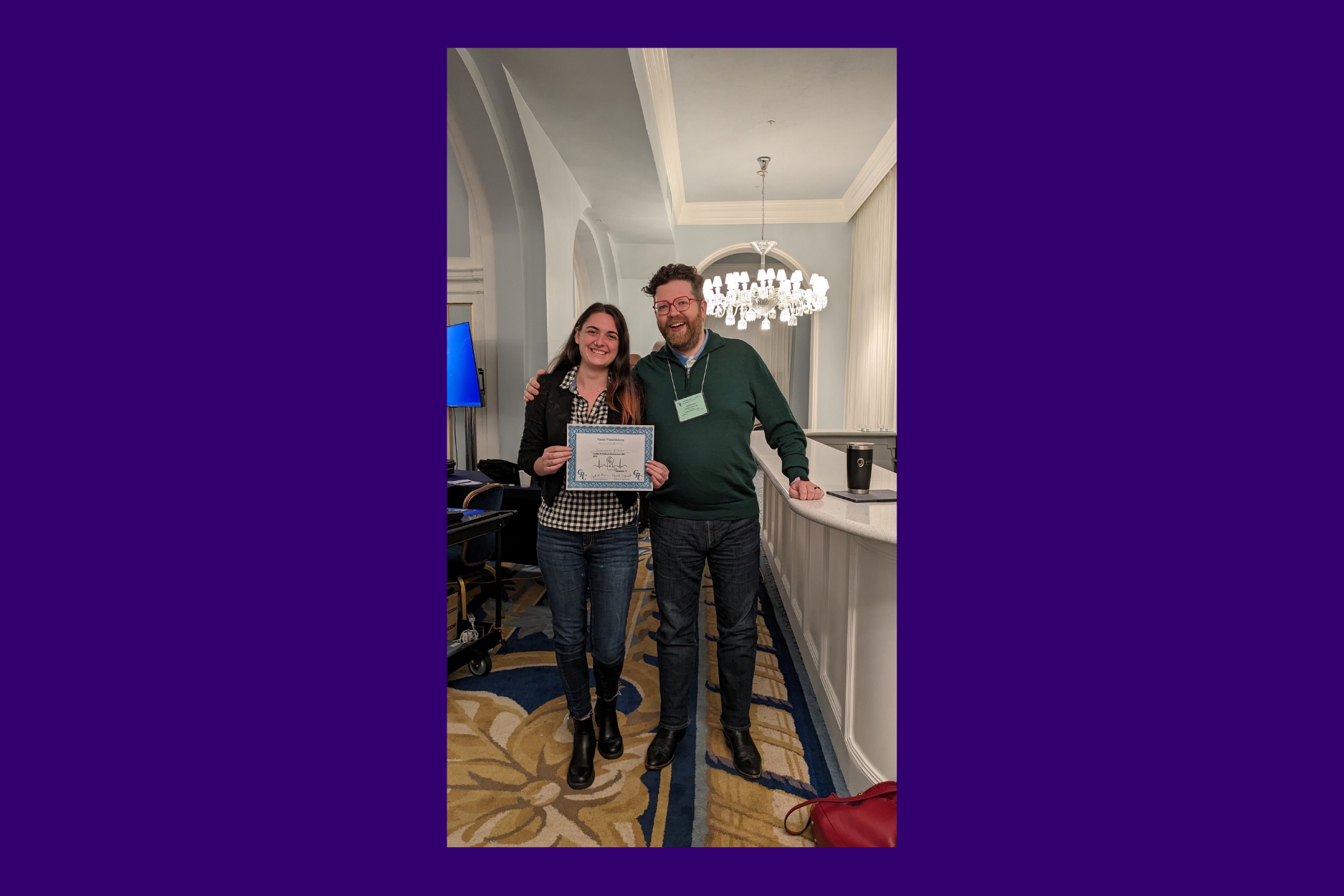
“At conferences it wasn’t like ‘I’m going to show up and I’m going to present my poster and I’m going to go back to my room.’ He was always introducing us to other people, always joking. We were meeting his old lab mates and old colleagues.”
Boyle takes that work seriously. So do many other faculty within the department and the University of Washington as a whole. “Many UW Bioengineering graduate students get opportunities to present their work at conferences, which can be very beneficial for professional development,” said Ken Yasuhara, director of the College of Engineering’s Office for the Advancement of Engineering Teaching & Learning. “The department works with us to survey research trainees, and they have described how mentors play a critical role in ensuring they get the most out of networking opportunities like conferences.”
Taking it to Heart
New paths are rarely the easiest to travel, and Bifulco’s experiences have reflected that. As a native of western Florida considering college, Bifulco was moved by the Deepwater Horizon oil spill and studied biochemistry while an undergraduate.
“I’m bright-eyed and bushy-tailed. But I got into the lab, started chemistry research, and I was like ‘Oh my, I hate this. I hate this,’” she said. Then there was a summer internship at Johns Hopkins. She worked on ALS research and found that she’s “not big on the blood and guts sort of thing, so I probably didn’t want to be a doctor.”
She found that she enjoyed the applied side of things, though. That’s what led her to Boyle’s lab. She also worked closely with UW Medicine’s Dr. Nazem Akoum, who was a member of her PhD committee and an important clinical mentor.
“I was at this crossroads where I didn’t know what I wanted to do. I just had a bunch of no’s. Choosing UW Bioengineering was really a decision on choosing the people I wanted to be around, and choosing Pat was choosing the mentor I wanted to be around,” Bifulco said.
“I’d gotten a lot of advice to choose your mentor wisely. I really took that to heart.”