UW Bioengineering
Fast Facts
News and Events

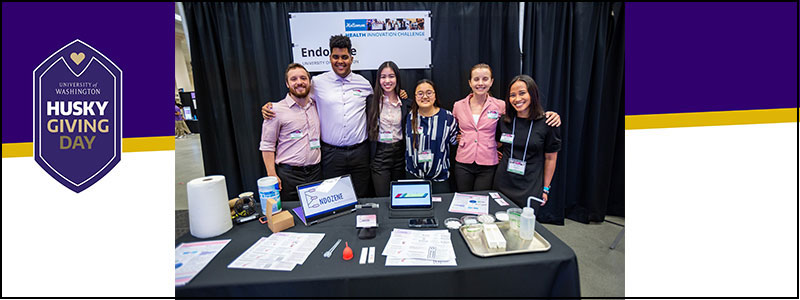
Empower tomorrow’s innovators: donate to UW Bioengineering on Husky Giving Day
Husky Giving Day is April 4. We invite you to support the important work of the UW Bioengineering department. Donate to the Bioengineering Excellence Fund

Valerie Daggett receives the University Faculty Lecture Award
Valerie Daggett, UW professor of bioengineering, received the 2023 University Faculty Lecture Award. Valerie Daggett will deliver a campus-wide lecture in 2024.

PharBE alum Robb Poier on the value of lifelong learning
Whether it is serving in the United States Army or working on breakthrough cancer therapies, Robb Poier (PharBE ‘23) has always been passionate about helping people and doing good in the world. more...
News & Events


Featured Publications
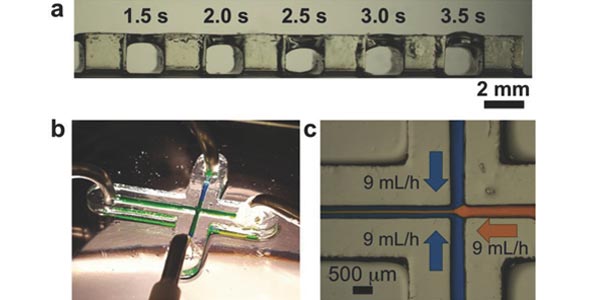
Desktop-Stereolithography 3D-Printing of a Poly(dimethylsiloxane)-Based Material with Sylgard-184 Properties
Professor Albert Folch's lab reports on the formulation, characterization, and SL application of a 3D?printable PDMS resin (3DP?PDMS) based on commercially available PDMS?methacrylate macromers, a high?efficiency photoinitiator and a high?absorbance photosensitizer. 3DP?PDMS resin enables assembly?free, automated, digital manufacturing of PDMS, which should facilitate the prototyping of devices for microfluidics, organ?on?chip platforms, soft robotics, flexible electronics, and sensors, among others.
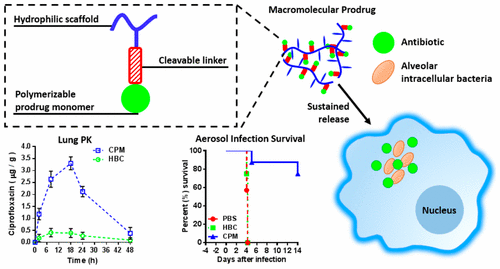
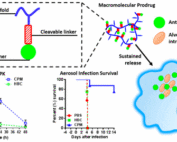
Synthetic Macromolecular Antibiotic Platform for Inhalable Therapy against Aerosolized Intracellular Alveolar Infections
The researchers demonstrate a macromolecular therapeutic platform that provides sustained local delivery of ciprofloxacin. Their work addresses the unmet need for inhaled treatments for lung-based intracellular bacterial infections such as Franciscella tularensis pneumonia (tularemia), which are currently treated with oral or IV antibiotics that poorly achieve and sustain pulmonary drug bioavailability.
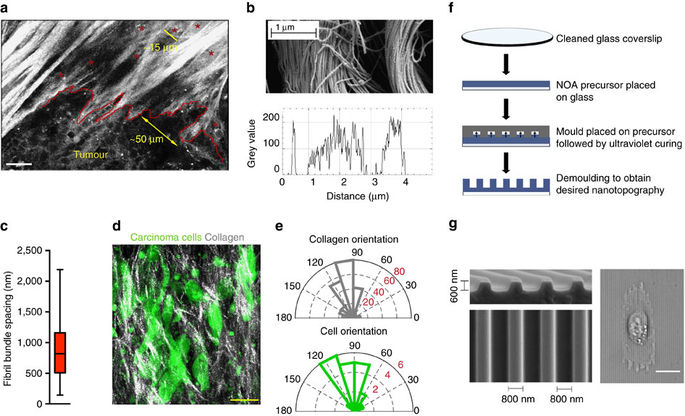
Anisotropic forces from spatially constrained focal adhesions mediate contact guidance directed cell migration
The researchers investigate whole cell and molecular level interactions that mediate contact guidance of phenotypically distinct carcinoma cells. By using nano-patterning techniques to produce substrates that facilitate detailed analysis, they identify a cellular mechanism of topographic sensing that can account for the diversity of responses across multiple cell phenotypes.