Innovation & Impact – UW Bioengineering eNews 2017-18 Year in Review
A recap of UW Bioengineering's efforts in 2017-18 to empower better health care through biomedical innovation, and impact medicine, for Washington and for the world.
At UW, former Giachelli Lab postdoc Mary Wallingford pursued novel research aimed at advancing knowledge of the body's least understood organ, the placenta. Now as an assistant professor at Tufts University, Dr. Wallingford pursues new directions for improving obstetric cardiovascular medicine.
UW Bioengineering Associate Professor Herbert Sauro will lead the $6.5M NIH-funded Center for Reproducible Biomedical Modeling, which aims to develop more predictive models of biological systems for research and medicine.
The New Innovator in NANOMED 2018 award, from the Institute of Electrical and Electronics Engineers (IEEE), recognizes individuals who have demonstrated exceptional early career technical advancement and innovation in the field of nano/molecular medicine and engineering.
The study, compiled by the Center for World-Class Universities of Shanghai Jiao Tong University, ranked more than 4,000 universities in 52 subjects across engineering, and the natural, life, medical and social sciences.
Suzie Pun, the Robert F. Rushmer Professor of Bioengineering, is one of 14 UW faculty elected to the Washington State Academy of Sciences in 2018. The academy’s mission is “to provide expert scientific and engineering analysis to inform public policymaking in Washington, and to increase the role and visibility of science in the state.”
Learning the language of business, with the help of UW's Buerk Center for Entrepreneurship, enabled the A-Alpha Bio team to launch their ideas from the lab to a startup company, and introduce their technology to Seattle's entrepreneurship community and beyond.
Monkeys with heart failure regrew working heart muscle after receiving human stem cells, report a UW team led by Charles Murry, professor of bioengineering, pathology and cardiology/medicine.
It's a wrap on another year of UW Bioengineering eNews. Read on to learn how our faculty and students are inventing the future of medicine, and serving as leaders in bioengineering research, education and outreach.
The BCTG provides an opportunity for graduate students interested in cardiovascular science and engineering to train under the guidance of excellent mentors. Application deadline: Thursday, July 12, 2018.
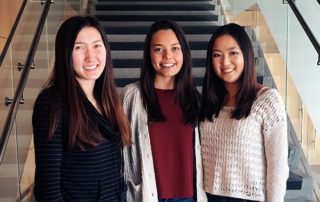
After wrapping up the second year of the Humans of UW Bioengineering blog, recent B.S. grads Vanessa Nguyen and Samantha Sun reflect on their motivation to become involved in the project and how they found inspiration in working with their fellow students to share their stories.
David Castner, UW professor of bioengineering and chemical engineering, is specifically acknowledged for "leading advances in rigorous and state-of-the-art surface analysis methods applied to organic and biological samples."
UW Bioengineering master's student Dylan Guelig is developing a cartridge-style two-dimensional paper network test that can detect minute amounts of proteins present in deadly flu viruses as well as a similar test for the Ebola virus.
The Washington Research Foundation Postdoctoral Fellow program seeks to support highly creative and dedicated researchers within Washington state who conduct groundbreaking work that addresses unmet public needs. Dr. Reiger focuses on developing new technologies that enable researchers to answer important questions about how signal patterns influence cells in health and diseased tissues.
Photo: 2018 UW Business Plan Competition Grand Prize winners A-Alpha Bio. Courtesy of UW Foster School [...]
Professor Gerald Pollack will share the podium with Nobel Laureates Luc Montagnier (Medicine) and Brian Josephson (Physics) in a special seminar on “New Horizons in Water Science" to be held at the Royal Society of Medicine in London in July 2018.
NanoSurface Biomedical, a startup co-founded by UW BioE alumnus Elliot Fisher (’16) and his former research advisor Deok-Ho Kim, associate professor of bioengineering, won $125,000 of funding in the final round of the Seattle Angel Conference on May 16.
The Schmidt Science Fellows postdoctoral program aims to expand the horizons of the next generation of leaders and innovators in the natural sciences, engineering, mathematics and computing. It promotes the development of interdisciplinary researchers who can drive world-changing advances in science and society.
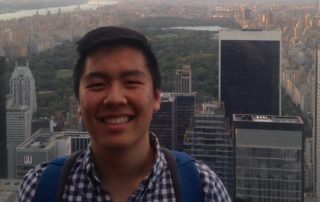
Senior Timothy Bi, part of the Daggett lab, talks about his experience in UW BioE and UW Academy. He sees med school in his future, but is planning to work for a few years and figure out his next steps.
August 20-21, UW campus. IDEAS brings together researchers, physicians, industry representatives and government officials committed to improving outcomes and reducing costs for end stage kidney patients on dialysis.
August 6-8, 2018. A 2.5 day intensive introduction to biomaterials, medical devices and biocompatibility presented by experts.
Senior Yiming Li talks about her research investigating the blood protein Von Willebrand factor (VWF) to better understand how to better control blood clotting, and how a sports injury led her to discover bioengineering. She reflects on how the BioE undergrad cohort system enhanced her experience in the major, and her hopes to pursue health care solutions for low-resource settings in her master's degree study at Cornell.
Senior Caleb Perez from Professor Suzie Pun's lab aims to advance cancer immunotherapy with dendritic cell vaccines. He talks about his work, how he honed his interest in bioengineering and translational research, and offers his perspective on what BioE has to offer students interested in research that addresses clinical challenges.
Five UW Bioengineering students have been named to the third annual class of the Husky [...]
Senior Robyn Langevin talks about her work in the Seelig synthetic biology lab on a new diagnostic that detects differential gene expression associated with cancer or autoimmune disorders. She also discusses the importance of academic outreach and giving back to the community, and how personal struggles helped her gain perspective on her experience in BioE.
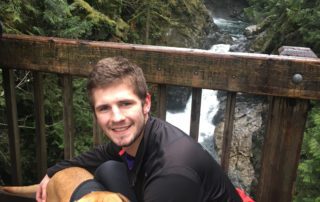
Luke is an undergraduate senior in bioengineering, and he has a long background before coming to UW as a non-traditional student. He balances school with running his own plumbing company, and you may recognize him as the father of our unofficial BioE mascot, Chinook. Read more about his story...
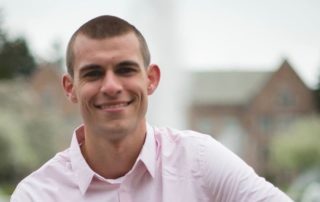
My name is Harrison. I do research in the Zheng Lab and I currently work at a cancer therapeutic company, Immune Design. After I graduate I will be attending the University of Michigan to pursue a Ph.D. in biomedical engineering.
Suzie Pun, the Robert F. Rushmer Professor of Bioengineering, has been named the 2018 recipient of the Marsha L. Landolt Distinguished Mentor Award, in recognition of her outstanding mentoring of graduate students.
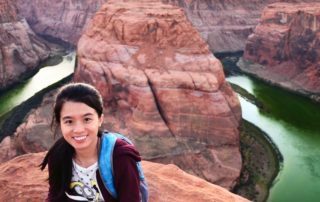
Jasmine Graham is a senior in bioengineering and is working in the Human Photonics Lab, where she is developing an optical pH measurement tool that analyzes bacterial biofilms in our mouths for early cavity detection and prevention. She is part of the Husky Leadership Initiative, co-runs the BioE Study Center and after graduation, is planning to pursue a graduate program at UC Berkeley.
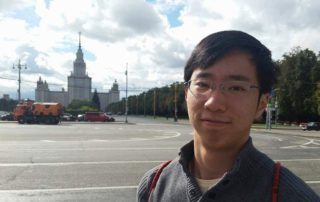
I’m Adam and I am in Dr. Ruikang (Ricky) Wang’s lab. The lab does OCT (optical coherence tomography) research. The goal of my capstone is to design an image processing tool for the lab. After I graduate, I am going for a Ph.D at Purdue University because I want the freedom that a Ph.D. offers to choose what I research. I might go into academia afterwards.
The international research team will investigate the dynamics of collective cell migration on curved surfaces. They aim to understand the mechanistic details of organism development and tissue repair, which could inform approaches in tissue engineering and regenerative medicine.
I’m Kim, and I’m in the GRID/Neural Systems lab. My project is about restoring tactile feedback through electrocorticography grids (ECoG) via the somatosensory cortex, or more simply put, how to make people feel again. After graduation, I’ll be traveling in Europe just for fun. I think this will be the last time I’ll get to travel for an extended period without having to worry about school or jobs. Afterwards, I’ll be working in ultrasound systems at Philips as a software engineer.
James Bryers, UW professor of bioengineering, presented at March 29's South Lake Union (SLU) Collaborative [...]
Seven UW Bioengineering undergraduate and graduate students have received 2018 National Science Foundation (NSF) Graduate [...]
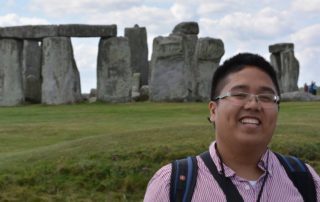
In addition to his research in Dr. Xiaohu Gao's lab and work on a team design project, senior Brian Gao is a member of the BioE Mental Health Initiative – an honors project focused on improving the state of mental health in the department through grassroots community-building.
Dr. Xiaohu Gao, professor of bioengineering, and Eva Corey, in UW Medicine’s Department of Urology, have developed a new way to deliver cancer-killing genetic material to prostate tumors that overcomes past hurdles. Their work appears today in Nature Biomedical Engineering.
Join us for a symposium to welcome a prestigious delegation from Nepal's Kathmandu University hosted by the UW Department of Bioengineering and Department of Global Health, in coordination with the UW Nepal Studies Initiative.
In the BioE course "Neural Engineering Tech Studio", undergraduate and graduate students team up to brainstorm solutions that address problems experienced by people living with sensory impairment, cognitive challenges and other sensorimotor conditions.
UW BioE is among the nation's top 10 bioengineering/biomedical engineering graduate programs, according to the 2019 [...]
In this issue: 50/20 Anniversary Updates | Faculty Research & Awards | Featured Publications | Trainee Highlights [...]
UW Bioengineering Ph.D. student Charles Roco is co-lead author on a paper published Mar. 15 in Science that reports on SPLiT-seq — or Split Pool Ligation-based Transcriptome sequencing — a new method to classify and track different types of cells in tissue sample.
The 2018 Department of Bioengineering Graduation Celebration will be held on Friday, June 8th in Hogness Auditorium. All BIOE students who will be graduating Autumn 2017, Winter 2018, Spring 2018 or Summer 2018 are eligible to participate.
Alyssa is an undergraduate senior in BioE, and is double-majoring in computer engineering. She is working in a biomechanics lab led by Dr. William Ledoux, where she investigates how certain joints are affected before and after ankle replacement surgery. She also is part of the Right Brain Campaign and volunteers at Seattle Children’s Hospital. Learn more about her experiences at UW and how she balances all of her activities.
UW's College of Engineering recently profiled Eric Chudler, research associate professor of bioengineering and executive director of the Center for Sensorimotor Neural Engineering, and his nearly-annual trips to India to teach neuroscience to Tibetan Buddhist monastics.
BioE teams A-Alpha Bio and OLA Simple received the first and second place prizes, and $25,000 of startup funding, at UW's 2018 Holloman Health Innovation Challenge
Alan Cabrera is a senior in BioE currently working in the Seelig Lab. Between his [...]
Donald W. Baker, former professor in UW Bioengineering and in Electrical Engineering, and inventor whose device has enabled life-saving imaging for millions of patients, passed away Feb. 27, 2018.
Riley is an undergraduate senior in bioengineering, and he’s also actively involved in the UW’s ROTC program. Read more about how he balances his participation in these two programs and how they both contribute to his life in college.
For 50 years, UW Bioengineering has engineered better health for a boundless future. Join us [...]
Preston is an undergraduate junior in bioengineering, and he is interested in the electrical engineering/programming aspects of bioengineering. Read more about how his experiences in and out of BioE, and being in a competitive major, have shaped his interests and goals.